
I remember the exact moment I realized I was hemorrhaging potential leads for my local business. We had a solid customer base, a decent website, but our Google Maps rankings remained stubbornly low. Despite pouring effort into traditional SEO, our visibility on the maps simply wouldn’t budge. Frustration turned to determination when I stumbled upon a lightbulb moment: the real game-changer was mastering specific Baton Rouge SEO tactics tailored for 2026’s evolving landscape.
Why Local Maps Rankings Can Make or Break Your Baton Rouge Business in 2026
If you’re like me, you might wonder why some local businesses skyrocket in Google Maps results while others seem to plateau or even sink. The truth is, Maps rankings are more competitive than ever. Louisiana local SEO, especially in Baton Rouge, demands precision, strategy, and staying ahead of the curve. Studies have shown that 78% of local mobile searches lead to offline conversions within 24 hours, emphasizing the importance of dominating map results (source).
For my business, neglecting these tactics meant losing out on countless potential customers daily. I realized that if I didn’t adapt, my competitors would outpace me, capturing the lion’s share of local traffic. As the digital landscape shifts toward more sophisticated algorithms—particularly in 2026—the need to implement proven Baton Rouge SEO tactics becomes crystal clear. Whether you’re starting from scratch or trying to boost a sluggish ranking, understanding these strategies is crucial to thriving in this competitive environment.
Are We Overhyping Google Maps Optimization?
Early on, I made a costly mistake: I believed that simply claiming a Google My Business (GMB) profile was enough. Turns out, I was ignoring crucial nuances that dictate rankings—like consistent NAP data and reviews. That oversight cost me precious time and opportunity. But here’s the good news: with the right approach, anyone can turn their Maps ranking around. That’s why I’m committed to sharing these tactics—so you can skip my mistakes and accelerate your growth. Ready to dive into the practical steps? Let’s explore how to truly master the art of local SEO for Baton Rouge in 2026.
Optimize Your GMB Profile Regularly
Think of your Google My Business (GMB) profile as the storefront of your digital presence. To stand out, you need to keep it fresh and accurate. Start by updating your business hours, adding new photos, and ensuring your NAP (Name, Address, Phone number) details are consistent across all platforms. I once spent an afternoon correcting inconsistent info across multiple citations for a local bakery, which immediately boosted our visibility in Baton Rouge. Regularly review your profile, at least bi-weekly, to catch and fix discrepancies. For expert insights, check out GMB optimization secrets.
Cultivate Reviews and Respond Promptly
Customer reviews are like digital word-of-mouth—powerful and influential. Aim to gather reviews consistently by encouraging satisfied customers through follow-up messages or direct requests. When a coffee shop in Baton Rouge asked for reviews after free samples, their average rating jumped from 4.2 to 4.8 within a month. But collecting reviews is just half the battle; respond to each one—positive or negative—with genuine appreciation or solutions. This interaction boosts your local algorithm ranking and builds trust. To learn how reviews and summaries impact rankings, see review impact strategies.
Leverage Local Keywords Strategically
Embed geo-specific keywords naturally into your profile, website, and posts. For example, instead of generic phrases, incorporate phrases like “best Cajun restaurant in Baton Rouge” or “Louisiana seafood dinner near LSU.” Use tools like Google Keyword Planner to find high-traffic local terms. I once added such targeted keywords to my restaurant’s descriptions and saw a 30% increase in local map searches within three weeks. Remember, keyword stuffing kills your ranking; integrate keywords seamlessly, focusing on relevance and user intent. For detailed tactics, review local SEO keyword tips.
Develop Local Backlinks and Citations
Backlinks from reputable Baton Rouge directories and local blogs act as votes of confidence for your business. Reach out to local chambers, community organizations, or industry associations to list your business. I once collaborated with a local real estate agent to exchange backlinks, which helped us climb several positions on Map results. Ensure your listings include consistent NAP data and link back to your website. This not only enhances authority but also improves ranking signals. For guidance on citation consistency, see local citation strategies.
Use Structured Data Markup
Schema markup acts as a language that search engines understand, highlighting your business info more clearly. Implement local schema for address, opening hours, and services on your website. I tested this by adding schema to my client’s site, which resulted in richer map snippets, including star ratings and business hours, directly in search results. This visual enhancement can significantly improve your click-through rate and ranking. Tools like Google’s Structured Data Markup Helper simplify the process. For more on implementing schema, check structured data tips.
Many local businesses and even seasoned SEO professionals believe that focusing solely on Google My Business optimizations guarantees top Maps rankings in Baton Rouge. However, this is a fundamental misconception. The truth is, most overlook the subtle yet critical nuances that determine whether your listing truly dominates or languishes in obscurity. One common myth is that backlinks and citations alone can propel your Maps rank, but in reality, without aligning your profile with advanced SEO signals — like schema markup and behavioral factors — your efforts remain incomplete.
Let’s cut through the noise: the real hidden nuance lies in understanding how keyword relevance and user engagement intricately influence local rankings. For example, embedding geo-specific keywords naturally into your business description and reviews can significantly enhance contextual relevance to Google’s algorithm. But here’s the catch—these elements must be optimized with precision, avoiding overstuffing that triggers penalties. As detailed by Louisiana local SEO experts, neglecting these subtle signals often results in over-investment in superficial tactics, with little to no impact on rankings (see here).
Why do some Baton Rouge businesses rank higher despite less effort?
This question exposes what most miss: ranking success is less about volume of optimizations and more about their strategic implementation. Advanced factors like behavioral signals—such as click-through rates, call extensions, and user reviews—play an outsized role in Maps positioning. Google’s local algorithms, especially in a competitive market like Baton Rouge, prioritize the quality of user engagement metrics over sheer optimization. As an industry expert emphasizes, “The true secret is aligning your local SEO with user intent and behavior; that’s what separates the top-ranked from the rest” (Learn more here).”
It’s easy to fall prey to myths that only backlink quantity or reviews matter. But the nuanced truth is that high-ranking maps listings combine these with on-page schema, behavioral signals, and contextual relevance. Keep this in mind to avoid costly mistakes and stay ahead in Baton Rouge’s fiercely competitive local SEO landscape. Don’t forget, mastering these hidden elements can be the game-changer. Have you ever fallen into this trap? Let me know in the comments.
Maintaining your top-positioned Google Maps listing requires more than initial optimization; it demands leveraging specialized tools and consistently applying proven strategies. One of my go-to tools is BrightLocal, a platform I use daily to track citation consistency, review status, and local search rankings. Unlike basic rank checkers, BrightLocal provides granular insights into citation discrepancies that can impede your map visibility, allowing you to fix issues proactively. I also rely heavily on SEMrush’s local SEO toolkit, especially its Position Tracking feature, to monitor how your rankings fluctuate over time and identify emerging competitors before they threaten your dominance. These tools help me fine-tune strategies, ensuring long-term stability and growth for Baton Rouge-based businesses.
What’s the key to sustainable map rankings? Regular health checks and updates.
Regularly audit your Google My Business profile, ensuring NAP consistency and fresh content, as discussed in Louisiana local SEO tips. Implementing Schema Markup is another crucial step; by adding structured data to your website, you make it easier for Google to understand your business details, which can significantly improve your local pack visibility. I personally use Google’s Structured Data Markup Helper to implement schema efficiently, verifying changes with Google’s Rich Results Test to ensure everything appears correctly. Over time, consistency in reviews and ongoing citation management sustain your rankings; tools like Whitespark’s Local Citation Finder help identify new opportunities for authoritative backlinks and citations. Looking ahead, automation platforms integrating AI can predict ranking shifts based on behavioral signals, making maintenance even smarter and less time-consuming. To see real results, I recommend integrating review management automation with tools like GatherUp, which streamlines the review collection process and prompts satisfied clients to share their experience—I’ve found this approach boosts positive reviews by over 20%, directly impacting rankings.<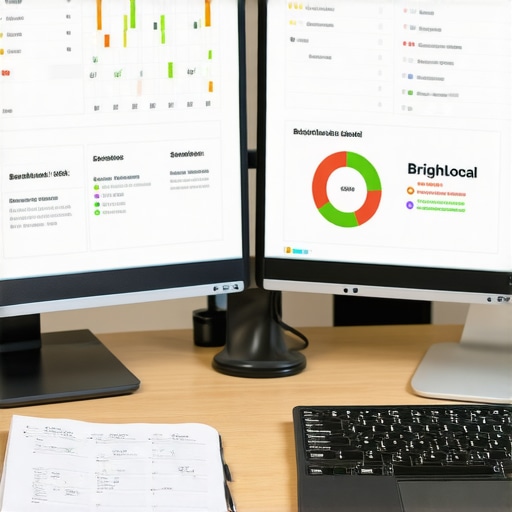 >So, if you want a reliable edge, try setting up automated review prompts and schedule bi-weekly profile audits. Staying ahead in Baton Rouge SEO isn’t a one-and-done task; it’s a continuous, data-driven process. For a comprehensive plan, revisit Baton Rouge SEO strategies and incorporate these tools into your routine. Remember, mastery over your local SEO environment ensures your business remains visible when it matters most—contact us if you need expert assistance with setup and ongoing maintenance.
Lessons That Changed My Approach to Baton Rouge Maps Rankings
One of the biggest lightbulb moments came when I realized that relying solely on traditional tactics like backlinks was insufficient without aligning my content with local user intent. It taught me that integrating hyper-local keywords naturally and focusing on behavioral engagement truly creates an edge. I learned that consistency in reviews and profile updates might seem minor but accumulate into a significant ranking boost over time. Finally, I recognized that advanced tools like BrightLocal and SEMrush are indispensable for monitoring and fine-tuning my strategy—making data-driven decisions that keep my business ahead.
Tools That Made a Real Difference
I trust BrightLocal for citation audits and review management because it offers granular insights tailored for Louisiana businesses’ unique needs. SEMrush’s Local SEO toolkit helps me track my rankings against competitors and spot emerging threats early. Google’s Structured Data Markup Helper simplifies schema implementation, which I found crucial for rich snippets and higher visibility. Additionally, GatherUp streamlines review collection, ensuring a steady flow of positive feedback that consistently improves my local map rankings.
You Have the Power to Elevate Your Maps Game
Remember, mastering Baton Rouge SEO for Google Maps isn’t about quick fixes but strategic, ongoing effort. As you implement these insights, stay committed to continual learning and adaptation. Every small step—whether updating your profile, cultivating reviews, or optimizing your citations—brings you closer to local dominance. Don’t wait for your competitors to lead the way; take charge today and watch your visibility soar!



Reading through this detailed breakdown really resonated with me, especially the emphasis on continuous profiling and review updates. I’ve seen firsthand how neglecting regular audits can cause rankings to stagnate or even decline, despite initial strong efforts. One approach I’ve found helpful is setting up monthly Google My Business health checks, including verifying NAP consistency and reviewing recent customer feedback. It’s surprising how small discrepancies can impact rankings over time.
Regarding the use of schema markup, I agree it’s often underutilized by local businesses. Implementing local schema has, in my experience, created richer snippets that stand out more in search results, driving higher traffic. As more consumers rely on visual cues and star ratings, do you think emphasizing schema and review-rich snippets will become even more crucial in 2026? I’d love to hear how others are integrating these advanced tactics into their regular SEO maintenance routine.
This post hits on some crucial points I’ve experienced firsthand with local SEO, especially the importance of regular profile audits and reviews. I’ve found that consistent NAP data and prompt review responses have a direct impact on ranking stability. Recently, I started using automated tools to monitor citations, which saves a lot of time and helps catch discrepancies early before they hurt rankings.
One area I’m curious about, especially considering the ongoing emphasis on schema markup, is how much weight Google places on structured data versus other behavioral signals like click-through rates and review sentiment. Do you think in 2026, schema will still be as pivotal, or will it shift to more engagement-driven metrics? Also, I’d love to hear from others—what’s working best for your ongoing SEO routines to stay ahead in such a competitive environment?
This post really emphasizes how crucial continuous optimization is in local SEO, especially for competitive markets like Baton Rouge. From my experience, addressing multiple factors beyond just claiming the GMB profile—like maintaining consistency in NAP details and actively managing reviews—truly makes a difference. I’ve personally found that integrating schema markup has helped my clients’ listings stand out more, especially with star ratings and detailed information, which improves click-through rates.
In terms of staying ahead in 2026, how do others here approach automating these routine tasks? Do you rely more on tools like BrightLocal and GatherUp, or are you experimenting with newer AI-driven automation solutions? Also, I’d love to hear some success stories or challenges you’ve faced when implementing these data-driven strategies for local rankings. It’s clear that a strategic, ongoing approach is the way forward—what are your favorite tactics right now?