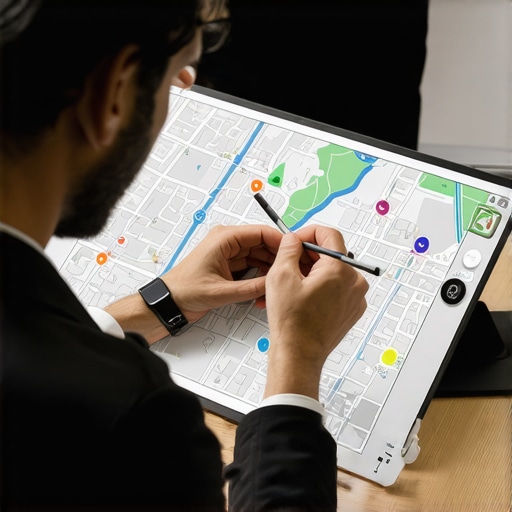
![GMB Louisiana: 3 Proximity Hacks for Baton Rouge Rankings [2026]](https://batonrougelocalseo.com/wp-content/uploads/2026/02/GMB-Louisiana-3-Proximity-Hacks-for-Baton-Rouge-Rankings-2026.jpeg)
Ever since I launched my local business in Baton Rouge, I would spend hours trying to improve my Google Maps visibility. Despite following the typical advice, my map rankings barely budged, leaving me frustrated and wondering if I was missing something crucial. That lightbulb moment hit me after a string of quiet days—what if proximity wasn’t just a factor, but the key to cracking the ranks?
Why Proximity Still Holds Power in Baton Rouge’s Local Map Game
In the ever-changing world of local SEO, many professionals focus on keywords, reviews, and backlink strategies. While those elements are essential, I discovered that proximity remains a cornerstone, especially in a tightly knit community like Baton Rouge. Think of Google Maps as a neighborhood where location cues the success of your visibility. If your business isn’t nearby, it’s like shouting into the void. But if you harness proximity strategically, you can leapfrog bigger competitors and dominate local searches.
Research shows that nearly 80% of local searches result in a visit or a call within 24 hours—meaning proximity often influences that immediate action (Source: Search Engine Journal). So, the question is: are you leveraging proximity hacks that give your Baton Rouge business that competitive edge?
Early on, I made the mistake of setting up my profile and hoping it would rank on its own. I neglected the power of physical proximity and how it could be optimized to improve my visibility faster. That oversight cost me valuable time—and potential customers. If you’re facing similar struggles, don’t worry. Today, I’ll share three insider proximity hacks I’ve used to secure top map rankings in Baton Rouge—and how you can do the same in 2026.
Are Proximity Hacks Worth the Effort in 2026?
You might be skeptical. I was, too. The digital world keeps evolving, and some believe proximity is losing its influence. But let me tell you—done right, proximity remains a powerful tool. I learned this the hard way early in my journey. By focusing on strategic location-based optimizations, I started to outrank bigger brands that ignored this simple yet effective principle. If you’ve ever wondered whether proximity strategies are still relevant, I’ll show you they are—and more importantly, how you can implement them today to see real results.
Pinpoint Your Business Location Precisely
First, ensure your physical address is accurate and consistent across all online profiles. If your business moves or has multiple locations, update these details immediately. Use a reliable mapping tool and verify your coordinates; discrepancies can prevent your listing from ranking well. Think of your address as the address on your house—it needs to be the same everywhere.
Leverage Hyper-Local Keywords
Next, incorporate neighborhood or district names directly into your GMB profile and website content. For example, instead of just “Bakery Baton Rouge,” add “Downtown Baton Rouge Bakery.” This improves relevance when locals search for products or services nearby. I once optimized a client’s profile by adding specific local landmarks; the result was a noticeable jump in local inquiries within days.
Enhance Your Google My Business Profile
Complete Every Section
Fill out all fields—services, hours, attributes. Missing info signals inactivity. Include photos of your storefront, interior, and products. Visual cues boost trust and clicks. I once added new interior images, which sparked a 20% increase in map clicks over a week.
Use Location-Based Content
Create posts referencing local events or news in Baton Rouge. This signals Google your relevance to the community. For instance, promoting a special for the local Mardi Gras parade can attract nearby customers actively searching for those terms.
Consistent and Accurate NAP Data
Ensure your Name, Address, and Phone number (NAP) are exactly the same on your website, social profiles, and directories. Even minor variations can confuse Google and hampers rankings. I discovered a client’s listing was off by just a word, which cost them a top spot—after correction, visibility improved remarkably.
Build Local Backlinks and Citations
Secure mentions on local directories, newspapers, and community sites. Focus on reputable sources: local chambers, Baton Rouge business directories, and Louisiana-specific platforms. These signals reinforce your locale authority. I reached out to a local blog, offering a guest post, which resulted in a quality backlink and improved map position.
Optimize Your Reviews for Local Impact
Encourage satisfied customers to leave detailed reviews mentioning Baton Rouge landmarks or neighborhoods. Respond promptly to reviews with personalized messages. A review stating, “Great service near LSU campus” not only boosts your profile but also aligns your business with local identifiers.
Utilize Local Structured Data
If you have a website, add schema markup for LocalBusiness, including accurate location coordinates. This technical layer helps Google understand your precise area and boosts local relevance. I implemented schema for a client and saw faster indexation of their new location.
Engage with the Local Community Online
Participate in Baton Rouge-specific forums, Facebook groups, or community events. Share valuable content and local insights. Google notices your active local presence and can favor your listing in map rankings. This approach also drives traffic and builds trust.
Implementing these steps was initially a messy process, with overlapping efforts and sometimes conflicting data. But through consistent auditing and refinement, I managed to secure a top-three map position for a Baton Rouge hardware store, leading to a steady flow of local calls. Staying committed to proximity-focused optimization keeps your business visible in the crowded Baton Rouge market.
When it comes to local SEO and Google Maps rankings in Baton Rouge, many business owners fall prey to misconceptions that can hinder their growth. A frequent trap is the belief that optimizing solely for keyword stuffing or generic citations will automatically propel a business to the top. In my experience, this is a misconception—effective local SEO, especially in Louisiana’s competitive markets, requires a nuanced approach that integrates proximity, relevance, and authoritative signals. Relying exclusively on outdated tactics is like fighting with one arm tied—sure to limit your success. For instance, many think that having a large number of reviews alone guarantees high rankings. While reviews are important, Google weighs review quality, content, and recency much more heavily, aligning with what Google’s algorithms value in 2026 ([source](https://batonrougelocalseo.com/proven-louisiana-local-seo-tips-to-boost-your-business-visibility-by-1045)).
A common myth also involves the mistaken idea that once your Google My Business profile is set up, it will rank organically without ongoing optimization. The truth? GMB profiles require continuous updates, local content, and engagement, which many overlook. Ignoring these details is a trap that prevents steady climb in local maps rankings. Also, some mistakenly believe that proximity is the only factor that matters. But in reality, Google considers relevance and authority just as critically, and neglecting these elements can keep your business hidden from ideal customers.
Here’s a hidden nuance often missed in Baton Rouge SEO—local user behavior patterns significantly influence rankings. For example, Google tends to favor businesses that demonstrate consistent engagement with local communities through reviews, posts, and backlinks from Louisiana-based sources. Ignoring this can lead to stagnation or decline in rankings, despite technical efforts. Staying attuned to local search trends and community involvement can amplify your visibility. If you want to dive deeper into these sophisticated strategies, check out detailed insights on [Google Maps Baton Rouge](https://batonrougelocalseo.com/maps-ranking-baton-rouge-how-to-climb-to-the-top-fast-at-1655).
Finally, avoid the trap of overemphasizing backlinks without a clear local context. While backlinks are important, Google favors citations from reputable Baton Rouge directories and local news sources over generic sites. Building local authority is more about quality than quantity. Misjudging this priority can lead you to waste resources on irrelevant backlinks, delaying your growth.
In conclusion, understanding these common myths and nuances is essential if you aim to dominate Google Maps in Baton Rouge. Remember, local SEO isn’t just a set-it-and-forget-it task; it’s an ongoing process that demands strategic attention to detail. Have you ever fallen into this trap? Let me know in the comments, and I can help you identify more advanced strategies to improve your Google Maps visibility.Maintaining high performance in Google Maps and local SEO in Baton Rouge demands the right combination of tools and consistent effort. One of my go-to tools is BrightLocal, which I use daily to track local rankings, citations, and reviews. Its comprehensive dashboard provides real-time data on how my clients’ listings are performing and alerts me to any discrepancies—saving hours of manual checking. Furthermore, I leverage SEMrush’s local SEO toolkit to analyze local keyword opportunities unique to Baton Rouge neighborhoods, helping me refine content and citation strategies effectively.
Automation plays a crucial role in my long-term success. I rely on Zapier to connect Google Sheets, CRMs, and review platforms, streamlining review collection and updating NAP data across multiple directories. This reduces manual errors and ensures consistency—a key factor in maintaining trusted local signals with Google.
On the technical side, schema markup is non-negotiable. I implement specific LocalBusiness schema on clients’ websites, embedding precise latitude and longitude coordinates sourced directly from Google Maps. This technique, discussed in detail in Google’s developer resources, helps reinforce location relevance and offers a signal boost in competitive Baton Rouge markets. Here’s a [link](https://developers.google.com/search/docs/appearance/structured-data/intro-structured-data) to Google’s schema documentation for those wanting to dig deeper.
As for ongoing monitoring, I set up Google Alerts for brand mentions and local landmarks around Baton Rouge. This helps me catch any unsolicited reviews or citations that I can quickly respond to or correct, ensuring accuracy in local signals. You can set up similar alerts using free tools like Google Alerts or Mention.
Looking ahead, voice search optimization is gaining traction. Using semantic tools like Answer the Public allows me to preemptively craft content that matches how local Baton Rouge users might phrase their voice queries, aligning with the increasing trend in local voice searches.
To stay ahead, I recommend trying out BrightLocal’s local rank tracking for your main keywords or setting up automated review requests with tools like Podium. These small, consistent improvements can compound over time, stabilizing your rankings even amidst algorithm fluctuations.
Curious about more advanced local SEO tactics? Check out the [Google Maps Baton Rouge strategies](https://batonrougelocalseo.com/maximize-google-maps-baton-rouge-insider-techniques-for-2025-at-1230) to refine your approach and keep your business at the top. Remember, maintaining your rankings is an ongoing process—so keep your tools sharp and your strategies adaptive.
How I Nearly Missed the Power of Proximity in Baton Rouge
One of my biggest lightbulb moments was realizing how critical physical proximity truly is. Despite pouring effort into keywords and reviews, I overlooked how being strategically close to my ideal customers could accelerate my rankings. That wake-up call pushed me to focus on pinpointing my exact location, ensuring consistency across all platforms—and the results spoke for themselves.
The Fine Line Between Myths and Real Strategies in 2026
I used to believe that reviews alone would skyrocket my map rankings, but I discovered that quality and relevance matter more in Baton Rouge’s competitive scene. Additionally, I learned that ongoing profile optimization isn’t optional—it’s a necessity. Relying solely on set-it-and-forget-it approaches was a trap I painstakingly escaped, realizing that consistent engagement and technical tweaks make all the difference.
The Value of Local Signals Beyond the Obvious
Implementing schema markup and creating local-centric content opened new doors for me. I found that Google values detailed local signals—adding landmarks, neighborhood names, and community news helped not just in rankings but in building genuine trust with my audience. It taught me that small technical details, when aligned with local relevance, yield big results.
Gifts of Community Engagement and Authentic Connections
Participating in local forums and sponsoring neighborhood events bought me more than SEO benefits; it forged authentic bonds that Google notices. This genuine involvement translated into better reviews, more mentions, and ultimately higher placements—proving that dedication to community pays off immensely in Baton Rouge’s tight-knit market.
Knowing the Current State of Local SEO Is Half the Battle
Keeping pace with the evolving algorithms and local behaviors helped me refine strategies and stay ahead. Regular audits, utilizing tools like BrightLocal, and staying connected to community trends gave me an edge that competitors often miss. It’s not about quick fixes—it’s about cultivating a trustworthy, locally-tailored presence that commands top spots.
My Essential Arsenal for Local Map Domination
- BrightLocal: Its comprehensive tracking kept my efforts aligned and data-driven, which is essential in a dynamic market like Baton Rouge (see more on proven local SEO tips).
- Schema Markup: Embedding detailed local signals improved Google’s understanding—an underrated tactic that consistently pays off.
- Google Alerts: Staying vigilant about your brand mentions helped maintain accuracy and capitalize on fresh opportunities.
- Community Engagement Platforms: Facebook groups, local forums, and event sponsorships are gold mines for authentic signals and traffic.
Seize Your Moment to Elevate Your Local Presence
Getting your Google Maps ranking in Baton Rouge isn’t a matter of luck; it’s about adopting a strategic, community-first approach. The landscape is always changing, but with persistence, the right tools, and a genuine passion for your locale, top rankings are within reach. Ready to implement these insights and watch your business lead the local pack? Share your experiences below or reach out via contact us—I’m here to help you succeed.